


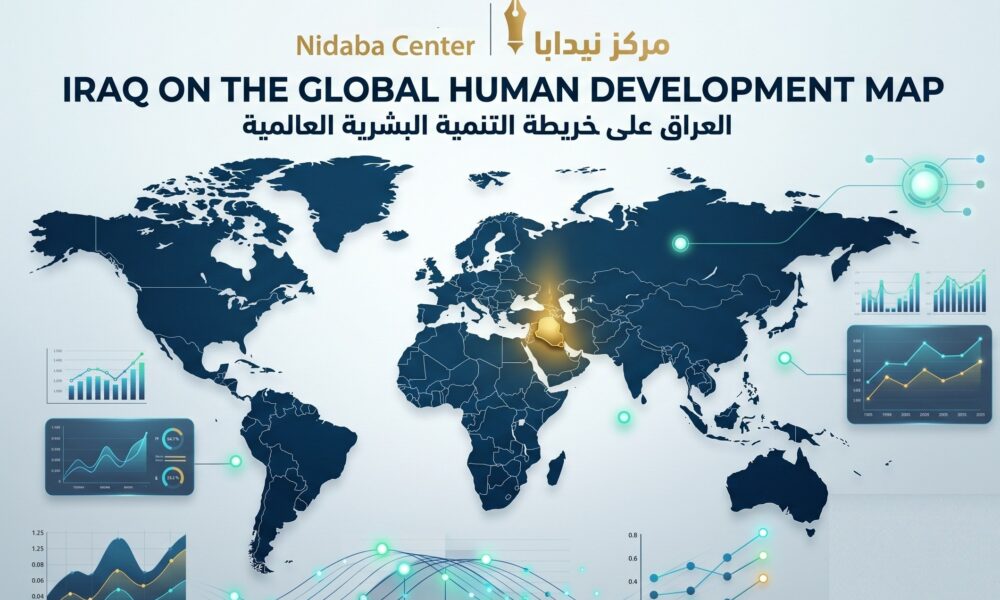
Iraq on the Global Human Development Map
An analytical reading into the data of the UNDP report on Iraq 2025
“A matter of choice: People and possibilities in the age of Artificial Intelligence”
Table Of Content
- Preface: General Context of the Report
- First: Iraq’s Position in the Global Index
- The Gap Between Income and Development: The Resource Curse Phenomenon
- Second: The Historical Trajectory of the Index (1990–2023)
- Third: Inequality and the Erosion of Development Gains
- Fourth: The Gender Gap The Open Wound
- Gender Inequality Index (GII)
- Fifth: Multidimensional Poverty
- Sixth: Environmental Sustainability and Planetary Pressures
- Seventh: Iraq in the Regional Mirror
- Conclusion: An Analytical Reading
- Appendix: Summary of Iraq’s Quantitative Data in the 2025 Report
Preface: General Context of the Report
The Human Development Report Office of the UNDP has released its global report for 2025 titled “A matter of choice: People and possibilities in the age of Artificial Intelligence”. The report is published at a critical moment described by its authors as an unprecedented slowdown in the pace of human development globally since the index was first calculated thirty-five years ago.
For the first time in decades, the gap between countries with very high human development and those with low development is widening instead of narrowing, recording the slowest annual improvement in the global index value outside the pandemic period.
Amidst this faltering global scene, Iraq’s data tells a dual story: a country with medium human development, possessing massive resources and a national income higher than its actual development reflects, but paying a heavy price in indicators of education, gender equality, and institutional efficiency.
This article reviews what the report said about Iraq, number by number, placing each indicator in its regional and international context.
Iraq’s global ranking is 126 out of 193 countries, with a Human Development Index (HDI) value of 0.695 for 2023 the same value recorded for the previous year 2022, indicating an effective halt in growth.
First: Iraq’s Position in the Global Index
The report classified Iraq in the “Medium Human Development” category, ranking 126th globally with a score of 0.695 on the Human Development Index (HDI) scale for 2023. Iraq maintained the same rank as in 2022, reflecting a state of stagnation in annual improvement. The index is calculated from three complementary dimensions:
| Indicator | Iraq’s Value 2023 | Significance |
| Life expectancy at birth | 72.3 years | Close to the Arab average (72.5) |
| Expected years of schooling | 12.4 years | Acceptable educational indicator in terms of infrastructure |
| Mean years of schooling | 6.8 years only | Major weakness below the Arab average |
| Gross National Income (GNI) per capita (2021 PPP) | $12,654 | Higher than the average of medium development countries |
Reading these four indicators together reveals a clear structural paradox: Iraq has a higher GNI per capita than many of its peers in the medium development category, reaching $12,654 in PPP terms, whereas the mean years of schooling for the adult population is only 6.8 years one of the lowest rates in its category.
This gap between spending capacity and educational capacity is the beating heart of Iraq’s development crisis.
The Gap Between Income and Development: The Resource Curse Phenomenon
The report presents a highly significant diagnostic indicator: the difference between a country’s rank by GNI per capita and its rank by HDI. In Iraq’s case, this difference is minus 16 ranks, meaning Iraq’s ranking on the income ladder is 16 places higher than its ranking on the actual development ladder.
This disconnect between a country’s wealth and the development of its citizens is a classic sign of what is economically known as the “Resource Curse”: where rentier revenues from oil flow without being efficiently converted into investments in human capital, services, and capabilities.
Iraq loses 16 ranks when moving from income ranking to human development ranking a clear indicator of the weak conversion of oil revenues into sustainable development gains.
Second: The Historical Trajectory of the Index (1990–2023)
The second table in the report allows a reading of the temporal trajectory of the Iraqi index over three and a half decades, revealing a story of gradual improvement whose pace has noticeably slowed in recent years:
| 1990 | 2000 | 2010 | 2015 | 2020 | 2023 |
| 0.531 | 0.592 | 0.650 | 0.675 | 0.680 | 0.695 |
When these figures are translated into average annual growth rates, what can be called a “worrying slowdown curve” appears: Iraq recorded an average annual growth of 1.09% during the 1990s (despite the blockade years), declined to 0.94% in the first decade of the 2000s, and then dropped sharply to only 0.52% during the period between 2010 and 2023.
This means the pace of human development improvement in Iraq today is roughly half of what it was in the 1990s, despite the improved financial resources available after 2003.
In the last year, growth practically stopped (0.695 → 0.695). Notably, Iraq lost two global ranks in the index classification during the 2015–2023 period, despite continued slow numerical improvement, because other countries are advancing at a faster pace. This relative decline reflects the country’s weak competitiveness in achieving development gains faster than its peers.
Third: Inequality and the Erosion of Development Gains
When the HDI is adjusted to account for internal inequalities among citizens of the same country, the extent of the erosion of apparent gains becomes clear. Iraq’s Inequality-adjusted Human Development Index (IHDI) drops to 0.534, a loss of 23.2% from the original value.
This means that about a quarter of human development in Iraq “evaporates” when factoring in the disparity between segments of society. More dangerously, the sources of this inequality are specifically concentrated in education:
| Inequality Dimension | Inequality Rate in Iraq |
| Inequality in life expectancy (Health) | 13.3% Medium level |
| Inequality in education | 29.7% The highest among the three dimensions |
| Inequality in income | 25.5% High |
| Overall human inequality coefficient | 22.8% |
| Gini coefficient for income (2010–2023) | 29.5 |
These figures indicate that the Iraqi education system generates deeper disparities than those generated by the labor market or health services.
Looking at income distribution, we find that the poorest 40% of the population receive 21.9% of the total income, while the richest 10% acquire 23.7%, and the richest 1% take 15.7% of the
national income. Although these numbers seem relatively better than many countries in the Middle East, they hide severe sectoral and geographic disparities not captured by the Gini coefficient alone.
Fourth: The Gender Gap The Open Wound
The gender gap in Iraq represents the most dangerous finding of the report and its most explicit indicator in revealing a structural imbalance. Iraq is classified in the fifth group of the Gender Development Index (GDI), which is the worst of the five groups, comprising countries where the index value between genders deviates by more than 10% from equality.
The actual value of the index in Iraq is 0.793, a very low value indicating a massive bias in favor of males.
| Indicator | Females | Males |
| Human Development Index | 0.592 | 0.747 |
| Life expectancy (years) | 74.1 | 70.4 |
| Expected years of schooling | 11.8 | 12.9 |
| Mean years of schooling | 5.6 | 8.0 |
| GNI per capita (PPP $) | $2,909 | $22,332 |
The estimated share of Iraqi women in GNI per capita does not exceed 13% of men’s share ($2,909 vs $22,332) one of the widest economic gender gaps globally.
Perhaps the most prominent revelation of the report is that the difference is not in health (where Iraqi women outperform men by more than three years in life expectancy), but in education, employment, and income opportunities. An Iraqi woman receives an average of 5.6 years of education compared to 8.0 years for a man, equivalent to 70% of her male counterpart’s education.
Gender Inequality Index (GII)
In the Gender Inequality Index, Iraq ranks 148th globally with a value of 0.558, a high value indicating severe inequality.
| Maternal mortality ratio (per 100,000 live births) | 76 |
| Adolescent birth rate (per 1,000 women ages 15–19) | 58.0 |
| Share of seats in parliament held by women | 29.1% |
| Share of females with at least secondary education (25+ years) | 24.5% compared to 39.8% for males |
| Female labor force participation rate | 10.7% compared to 67.2% for males |
The most worrying paradox stems from comparing the percentage of parliamentary seats for women (29.1%a respectable percentage thanks to the quota system) with their actual participation rate in the labor market (only 10.7%). This means the official political empowerment of Iraqi women far exceeds their actual economic empowerment.
The 10.7% rate is among the lowest female labor force participation rates in the world, and even among Arab countries, where the average female participation in Arab countries combined is about 18.4%. This gap is a direct translation of the economic loss the country endures due to the idling of half its human capacity.
Fifth: Multidimensional Poverty
The report relied on a 2018 survey (Multiple Indicator Cluster Survey) to calculate Iraq’s Multidimensional Poverty Index (MPI), and the results were as follows:
- Overall Index Value (MPI): 0.033
- Proportion of the population in multidimensional poverty: 8.6% (about 3.48 million people in 2018, expected to reach 4.56 million by 2030)
- Proportion of the population vulnerable to multidimensional poverty: 5.2%
- Proportion in severe multidimensional poverty: 1.3%
- Intensity of deprivation: 37.9%
- Poverty rate in rural areas: 18.9% compared to only 0.1% in urban areas
Education alone contributes 60.9% to multidimensional poverty in Iraq while health contributes 33.1% and standard of living only 6.0%.
This composition is considered unusual regionally and globally. While the standard of living component dominates poverty indicators in most developing countries, Iraq primarily suffers from “educational poverty.”
This result highlights, once again, that Iraq’s development bottleneck is not so much about spending as it is structural, linked to the decline in the quality of the educational system and school dropouts. The figures also reveal a stark urban-rural gap: while multidimensional poverty almost entirely disappears in cities (0.1%), it affects about a fifth of the rural population (18.9%).
Sixth: Environmental Sustainability and Planetary Pressures
The report adjusts the HDI to account for the pressures exerted by each country’s economic activities on the planet (carbon emissions and material footprint). Iraq has a “relatively surprising” performance here:
- Planetary pressures-adjusted HDI (PHDI) value: 0.665
- Difference from original HDI: only 4.3% (slight decline)
- Rise in ranking: Up 13 places when adjusted for sustainability
- CO2 emissions per capita: 3.9 tonnes
- Material footprint per capita: 3.2 tonnes (low)
These indicators present an opposite picture to what is expected of an oil-producing country: Iraq is not considered among the world’s high-consumption countries, as its per capita emissions remain modest compared to other Gulf countries. However, reading these numbers requires a methodological reservation: Iraq produces oil for export, not local consumption, and thus the emissions from its combustion are attributed to the importing countries.
Seventh: Iraq in the Regional Mirror
The report classifies Iraq within the group of twenty Arab countries and territories. When comparing Iraq’s data to the regional averages, a mixed picture emerges:
| Indicator | Iraq | Arab States Average |
| Human Development Index (HDI) | 0.695 | 0.719 |
| Inequality-adjusted HDI (IHDI) | 0.534 | 0.544 |
| Gender Development Index (GDI) | 0.793 | 0.871 |
| Gender Inequality Index (GII) | 0.558 | 0.539 |
| Multidimensional Poverty Index (MPI) | 0.033 | 0.072 |
| Women’s share of income ($) | $2,909 | $5,493 |
Iraq falls below the Arab average in the general index and records a noticeably worse performance in the gender gap. However, it outperforms the Arab average in multidimensional poverty rates, reflecting that the basic standard of living in Iraq is relatively better compared to other poorer Arab countries. The most crucial data point is that an Iraqi woman’s share of national income equals only about 53% of her counterpart’s share in the Arab states average.
Conclusion: An Analytical Reading
The 2025 UNDP report data presents a paradoxical picture of Iraq: a middle-income country possessing abundant resources and a young demographic boom, yet translating these advantages into human development much slower than its peers.
The five most urgent axes revealed by the report, which should top public policy priorities in the coming phase, can be summarized as follows:
- The Education Crisis is the Mother of All Crises: Reforming the educational system becomes not just a social issue, but the major economic issue for the next decade.
- Liberating Half the Human Capacity: The 10.7% female labor force participation rate represents a direct economic loss. Raising this to the regional average would significantly increase GDP.
- Breaking the Resource Curse: Iraq spends its oil revenues with low developmental efficiency. The solution lies in shifting to capital spending on education, infrastructure, and productive capacities.
- Regional, Not Sectoral, Development Policies: The urban-rural gap reveals Iraq’s need for spatial development maps targeting marginalized governorates.
- Not Settling for Apparent Sustainability Indicators: Amidst accelerating climate change, Iraq needs local environmental indicators separated from those linked to global consumption.
Iraq is not developmentally poor but rather a country that spends its wealth with low efficiency. The overarching message the 2025 report sends to Iraq is not a warning of an imminent catastrophe, but an invitation for recalibration.
Appendix: Summary of Iraq’s Quantitative Data in the 2025 Report
| Global Rank | 126 out of 193 |
| Human Development Index (HDI) 2023 | 0.695 |
| Inequality-adjusted HDI (IHDI) | 0.534 (23.2% loss) |
| Gender Development Index (GDI) | 0.793 (Group 5 — Worst) |
| Gender Inequality Index (GII) | 0.558 (Rank 148) |
| Multidimensional Poverty Index (MPI 2018) | 0.033 (8.6% of population are poor) |
| Planetary pressures-adjusted HDI (PHDI) | 0.665 (only 4.3% decline) |
| Average annual growth 2010–2023 | 0.52% (sharp slowdown) |
| Difference between income and development rank | -16 ranks |
| Female labor force participation rate | Only 10.7% |
| Educational contribution to multidimensional poverty | 60.9% |
Source: Human Development Report 2025 “A matter of choice: People and possibilities in the age of Artificial Intelligence”, UNDP, Statistical Tables 1, 2, 3, 4, 5, 6, 7.

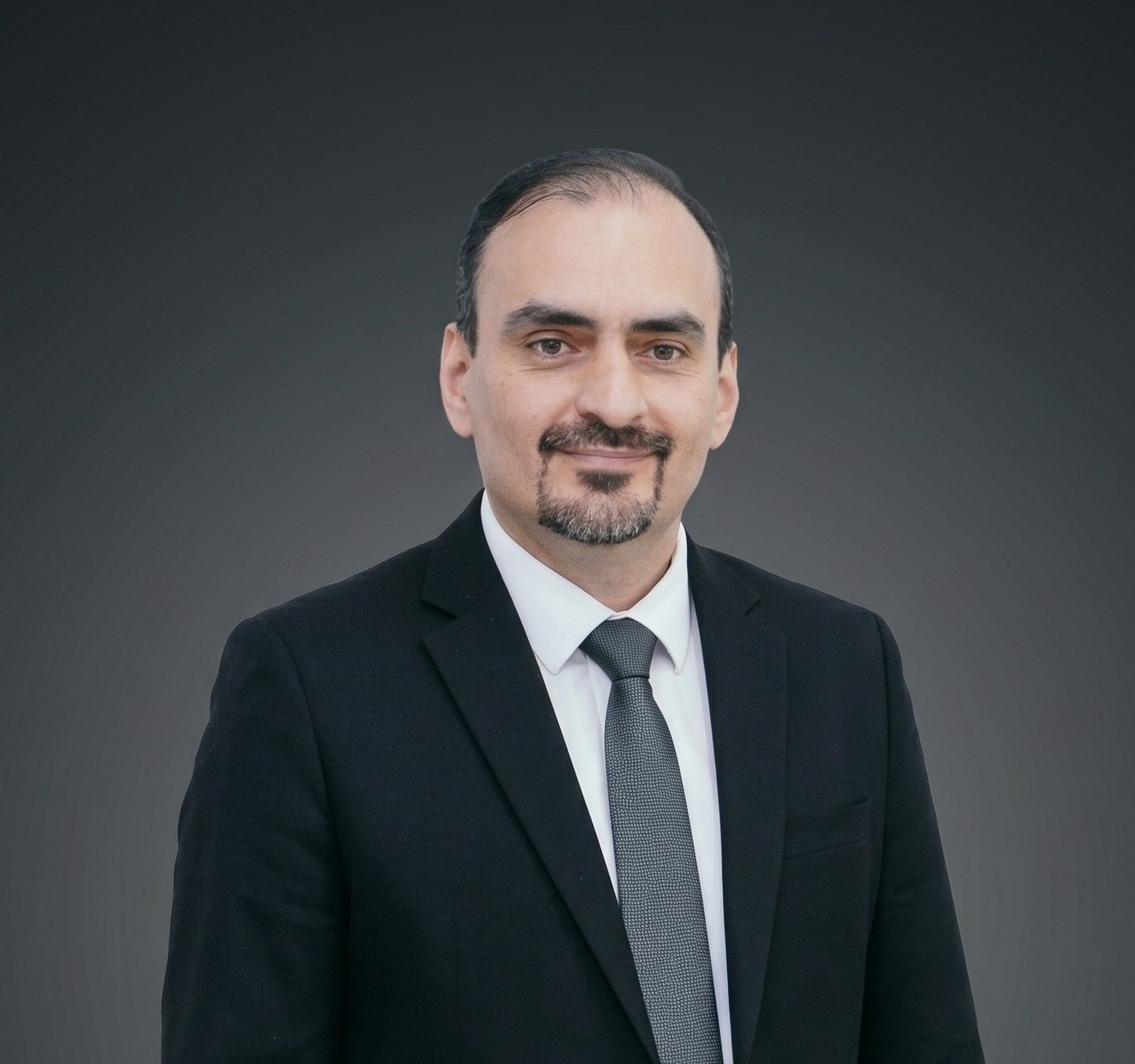
Manar Alobaidy
Manar Al-Obaidi: An Iraqi engineer and economic analyst, and the Executive Director of the Future Iraq Foundation for Economic Research. Known for his "engineering precision" in diagnosing the Iraqi economy's structural flaws, Al-Obaidi relies on data-driven analysis rather than traditional political discourse. His work focuses extensively on foreign trade, private sector growth, and non-oil revenue development, making him a trusted reference for simplifying complex financial trends and enhancing public and investment awareness of market dynamics.
No Comment! Be the first one.