



The Iraqi Economy Facing China’s Diversification Storm: An Analysis of Market Share Decline in Favor of Atlantic Basin Competitors
As China diversifies its energy sources, the Iraqi economy faces a structural threat as market share shifts toward Atlantic competitors like Brazil and Angola, a challenge that goes far beyond...

I. When Optimism Misreads the Market
When the Strait of Hormuz reopens and tankers return to their usual routes, many will hasten to believe that the oil landscape will return to its former state. However, a careful reading of Chinese customs data for the first quarter of 2026 reveals a more disturbing reality: the shift in the Chinese oil market is too deep to be fixed by merely reopening the Strait.
Table Of Content
- I. When Optimism Misreads the Market
- II. Brazil: A Methodically Growing Competitor
- Drivers of Brazilian Growth
- III. Angola: The Strategic Challenger from the South
- IV. The Core Threat: Systematic Chinese Diversification
- V. Strategic Roadmap: What Must Iraq Do?
- Conclusion: Hormuz is Not the Only Problem
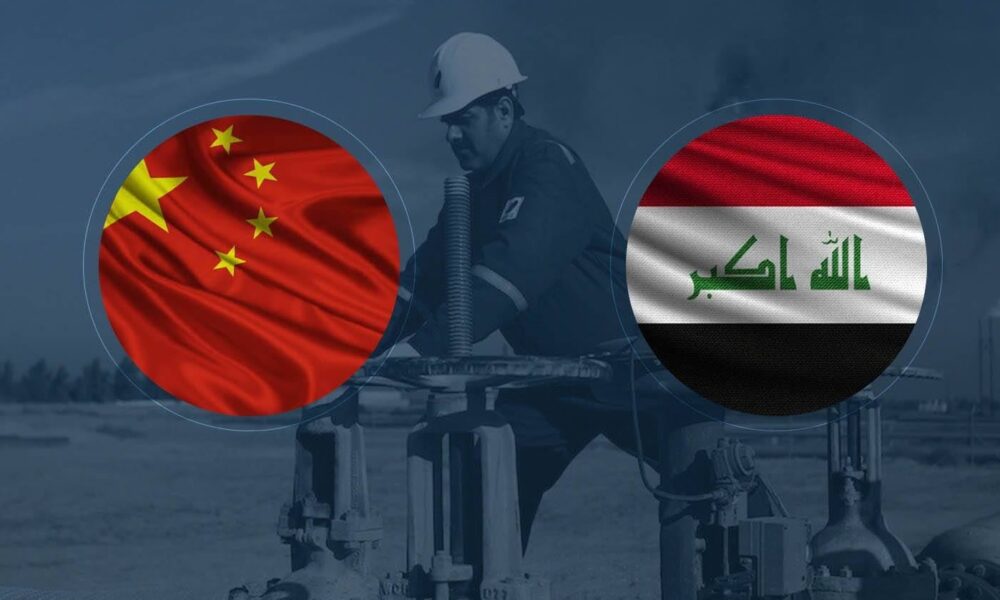
Iraq lost its rank as the third-largest oil supplier to China to Brazil in Q1 2026. While the total Chinese market grew by 10.2%, Iraq’s market share fell from 16.2% to 10.9%. This equation market growth alongside share decline is the most dangerous sign in the Iraqi oil scene today.
The Number That Should Worry Baghdad: In March 2026 alone, Brazil exported 35.9 million barrels to China compared to Iraq’s 28.2 million a gap of 7.7 million barrels in a single month. This is equivalent to 248,000 barrels per day going to Brazil instead of Iraq.
II. Brazil: A Methodically Growing Competitor
What is happening in Brazil is not a passing boom, but an accelerated structural transformation. In February 2026, Brazilian production reached 4.1 million barrels per day, a 16.4% increase over the previous year.
Brazil’s Performance Metrics (Q1 2025 vs. Q1 2026):
| Indicator | Q1 2025 | Q1 2026 | Change |
| Exports to China | 407 Million | 2,457 Million | +503% |
| Rank among China’s suppliers | 9th | 3rd | +6 Positions |
| Daily Production | 3.5m bpd | 4.1m bpd | +16.4% |
| Monthly VLCC Trips (Brazil-China) | 5 Trips | 14 Trips | +180% |
| China’s share of Brazil’s exports | 38% | 45% | +7 Points |
Drivers of Brazilian Growth:
- Pre-Salt Fields: These deep-water fields operate with record efficiency and account for 62% of Petrobras’s $69.2 billion investment plan for 2026-2030.
- Price Flexibility: When Saudi Arabia raised its official selling prices to Asia in 2025, price-sensitive Chinese refineries immediately shifted orders toward cheaper Brazilian crude.
- Outside of OPEC: Brazil is not restricted by OPEC quotas, allowing it to raise production and exports freely while Iraq remains bound by alliance commitments.
- Crude Quality: Brazilian crude is light and low-sulfur, producing higher proportions of high-value gasoline and diesel compared to heavy Iraqi crude.
III. Angola: The Strategic Challenger from the South
In the last quarter of 2025, Angola exported 93.9 million barrels of crude, with China capturing more than 60% of these exports. Angola is preparing to raise production by an additional 6.5% in 2026 to reach 1.14 million bpd.
Angola’s Competitive Advantages:
- Economic Dependency: Oil represents 90% of Angola’s exports and 30% of its GDP, forcing it to continue pumping regardless of price levels.
- Crude Quality: Light, low-sulfur Angolan crude is preferred by advanced refineries in East China.
- Production Freedom: Angola has been outside of OPEC since January 2024, granting it full freedom in determining production and pricing.
- Strategic Partnership with Beijing: Deepening cooperation in exploration, refining, and technical training solidifies its status as a preferred strategic supplier.
IV. The Core Threat: Systematic Chinese Diversification
This is not a temporary replacement due to the Hormuz crisis; China has followed a clear strategy for years to diversify its crude sources and reduce dependence on a single region. The Hormuz crisis merely accelerated Beijing’s efforts to strengthen ties with Atlantic Basin suppliers.
Comparison Table:
| Factor | Brazil & Angola | Iraq |
| Geopolitical Risks | Nearly Non-existent | High and Frequent |
| OPEC Affiliation | No – Full Freedom | Yes – Restricted by Quotas |
| Pricing Flexibility | Flexible & Competitive | Limited & Restricted |
| Crude Type | Light, High Quality | Heavy, Medium Quality |
| Delivery Terms | Negotiable – CIF | FOB Only |
V. Strategic Roadmap: What Must Iraq Do?
Addressing this dual threat requires action on three levels: urgent (short-term), transformative (medium-term), and structural (long-term).
- Establishing a National Tanker Fleet (FOB to CIF): Currently, Iraq sells oil exclusively on a “Free on Board” (FOB) basis, meaning all value-added from shipping and insurance goes to intermediaries. Moving to “Cost, Insurance, and Freight” (CIF) turns Iraq into a full-chain supplier.
- Improving Crude Mix: In March 2026, Iraqi crude recorded the lowest price among major suppliers at $67.44 while the market average was $72-$75. Developing light crude fields like Mansouriya and Akkas to close the quality gap could add $1.65 billion annually from the Chinese market alone if prices rise by just $5.
- Renegotiating Framework Agreements: Existing “Oil for Reconstruction” deals (2019/2021) restrict Iraq with terms that do not reflect current market volatility. Pricing should be linked to monthly Brent averages with periodic review clauses.
- Diversifying Chinese Buyers: Moving beyond exclusive reliance on Chinese state-owned companies toward independent refineries (Teapots) in Shandong Province to create competition and improve realized prices.
- Infrastructure Development: Completing the Grand Faw Port and alternative pipelines (Aqaba and Ceyhan) removes total dependence on the Strait of Hormuz and increases the “geopolitical security premium” on Iraqi barrels.
- Vertical Partnerships: Entering joint ventures with Chinese refineries similar to the Saudi Aramco model allows Iraq to control refining margins rather than just crude prices.
- Integrating with the Belt and Road: Leveraging Iraq’s geography as a “Development Road” to negotiate with China as a strategic partner rather than just a product supplier.
Conclusion: Hormuz is Not the Only Problem
When the Strait opens, some Chinese demand for Gulf oil will return, but part of the share seized by Brazil and Angola will not. Chinese refineries that discovered the quality of Brazilian crude and the safety of Atlantic routes will not easily abandon these options.
Iraq stands at a true crossroads: it must either modernize its competitive tools—from owning a national fleet to diversifying its buyers—or be lured by the false geopolitical stability after Hormuz into accepting a declining market share. The real threat is not the closure of a strait; it is continuing to sell oil as if 2019 never ended.
Sources: Chinese Customs Data (Q1 2025/2026), EIA, IEA, S&P Global Commodity Insights, Atlantic Council.

Manar Alobaidy
Manar Al-Obaidi: An Iraqi engineer and economic analyst, and the Executive Director of the Future Iraq Foundation for Economic Research. Known for his "engineering precision" in diagnosing the Iraqi economy's structural flaws, Al-Obaidi relies on data-driven analysis rather than traditional political discourse. His work focuses extensively on foreign trade, private sector growth, and non-oil revenue development, making him a trusted reference for simplifying complex financial trends and enhancing public and investment awareness of market dynamics.
No Comment! Be the first one.