


Legal, Institutional, and Economic Reform of Iraq’s Energy Sector
A strategic roadmap for reforming Iraq’s energy sector through legal and institutional restructuring. This article examines transforming state owned enterprises into independent profitable entities.

Many observers of the Iraqi energy file encompassing oil and gas production, electricity, and renewables tend to focus their discourse on technical challenges while overlooking the structural hurdles of administrative, institutional, and legal legacies. Furthermore, there is a marked absence of discussion regarding the economic dimensions and public policies of this vital sector, especially when compared to successful global economic models.
Table Of Content
This article explores the essential steps required to reform the Iraqi energy sector. The goal is to align the sector with the requirements of the 2005 Federal Constitution, address legal and administrative gaps, and mature institutional frameworks. By doing so, these institutions can transform into productive, profitable entities that support the democratic system, protect social peace, and guarantee the rights of future generations.
The Reality of Iraqi State-Owned Enterprises (SOEs)
Public companies and government departments remain the primary employers in Iraq. According to 2021 Ministry of Planning estimates, public sector employees constitute approximately 17% of the total population (41 million). This is an exceptionally high ratio compared to global benchmarks for democratic states following market economy principles.
With a population growth rate of 3% (World Bank estimates), this segment is poised to expand further, placing an immense burden on federal budgets. The result is a drain on state revenues through mounting subsidies for inefficient institutions, without regard for profit and loss metrics. Most SOEs in Iraq are currently loss-making entities that drain the treasury, serve as hubs for political patronage, and stifle the private sector, ultimately undermining the national economy.
Challenges Facing the Energy Sector
The energy crisis in Iraq is rooted in the fragmentation of the sector across three ministries (Oil, Electricity, and Industry) and the overlap between regulatory bodies (Ministries) and regulated entities (SOEs). This is exacerbated by a lack of unified leadership; nearly 30 ministers have headed these portfolios since 2003, leading to inconsistent visions, wasted opportunities, and a climate ripe for mismanagement and corruption.
Furthermore, governmental operations remain shackled by centralized, socialist-era legislation (upheld by Article 130 of the Constitution) that conflicts with the 2005 Federal Constitution’s shift toward decentralization and a market economy. These challenges have led to technical and commercial losses in electricity reaching 55%, and refinery inefficiency declining to 50%. This is accompanied by ineffective government subsidies costing the treasury over $25 billion annually. These factors contribute to “energy poverty,” costing the state between $17 and $20 billion annually in lost industrial and commercial opportunities (IEA estimates).
A Roadmap for Reform: Legislative and Structural Procedures
The solution lies in enacting long-stalled federal laws, specifically the Oil and Gas Law (Article 112) and the Federal Revenue Distribution Law (Article 106). Establishing the Federal Energy Council and the Federal Revenue Distribution Commission is crucial to creating a sector that ensures domestic energy security while positioning Iraq as a pivotal global oil producer and regional electricity hub.
Key Proposals for Reform:
- Legislative Reform: Amend the Ministry of Electricity Law (No. 53 of 2017) to decouple SOEs, allowing them to operate independently on a profit-loss basis, followed by a gradual privatization based on international standards.
- Unified Energy Ministry: Enact a federal law to establish a “Regulatory” Ministry of Energy, replacing Law No. 101 of 1976, while granting operational independence to its subsidiaries.
- Financial Independence: Separate SOEs from ministries. They should be self-funded operational entities. If an SOE fails to be profitable, it should face liquidation. Subsidies on tariffs and fuel should be replaced by targeted financial support for those registered in social safety nets.
- Asset Ownership: Transfer ownership of SOE assets to the Ministry of Finance, leaving the sectoral ministries with purely regulatory roles.
- Global Governance: Collaborate with international consultancy firms to restructure SOE boards. Leadership should be selected based on strict professional criteria, potentially including international expertise to fill capacity gaps, as seen in successful Gulf models.
- Stock Market Listing: Evaluate SOE assets via international firms for potential listing on the stock exchange, offering shares to investors to attract capital.
- Conflict of Interest: Ensure a total separation between ministerial authority and the executive management/contracting processes of SOEs.
- Unified Energy Leadership: As a preliminary step, the position of Deputy Prime Minister for Energy Affairs should be a permanent, stable post. This individual should chair the Ministerial Council for Energy to oversee long-term strategy and institutional reform.
Requirements for Execution
These reforms require a political will that prioritizes state-building over political interference. If implemented, Iraq could end the era of “disguised unemployment” and the cycle of ministries acting as “cash cows” for political factions.
Iraq is at a crossroads. It needs visionary leadership capable of engaging the international community and adopting institutional frameworks that attract global investment. This is the only path to achieving self-sufficiency and becoming a stabilizing force in global energy security.
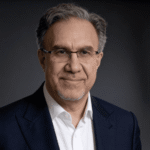
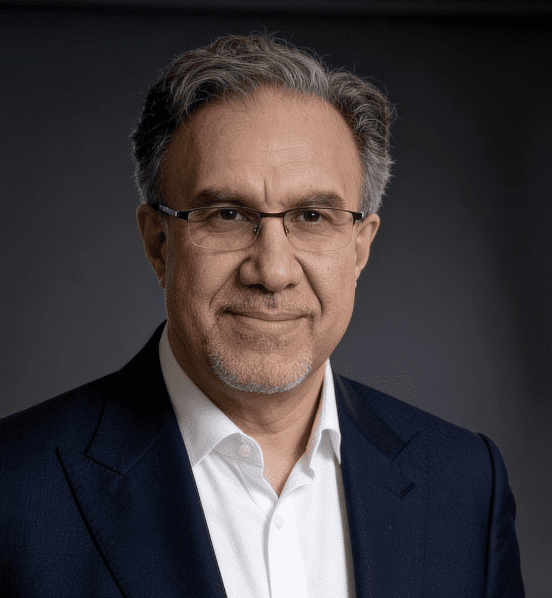
Dr. Luay Al-Khatteeb
Former Minister of Electricity & Member of the Federal Energy Council – Republic of Iraq. Previously the founding director of Iraq Energy Institute, Fellow at the Center on Global Energy Policy Columbia University-SIPA and a former Foreign Policy Fellow at Brookings Institution.
No Comment! Be the first one.